June 2026 - ankpal

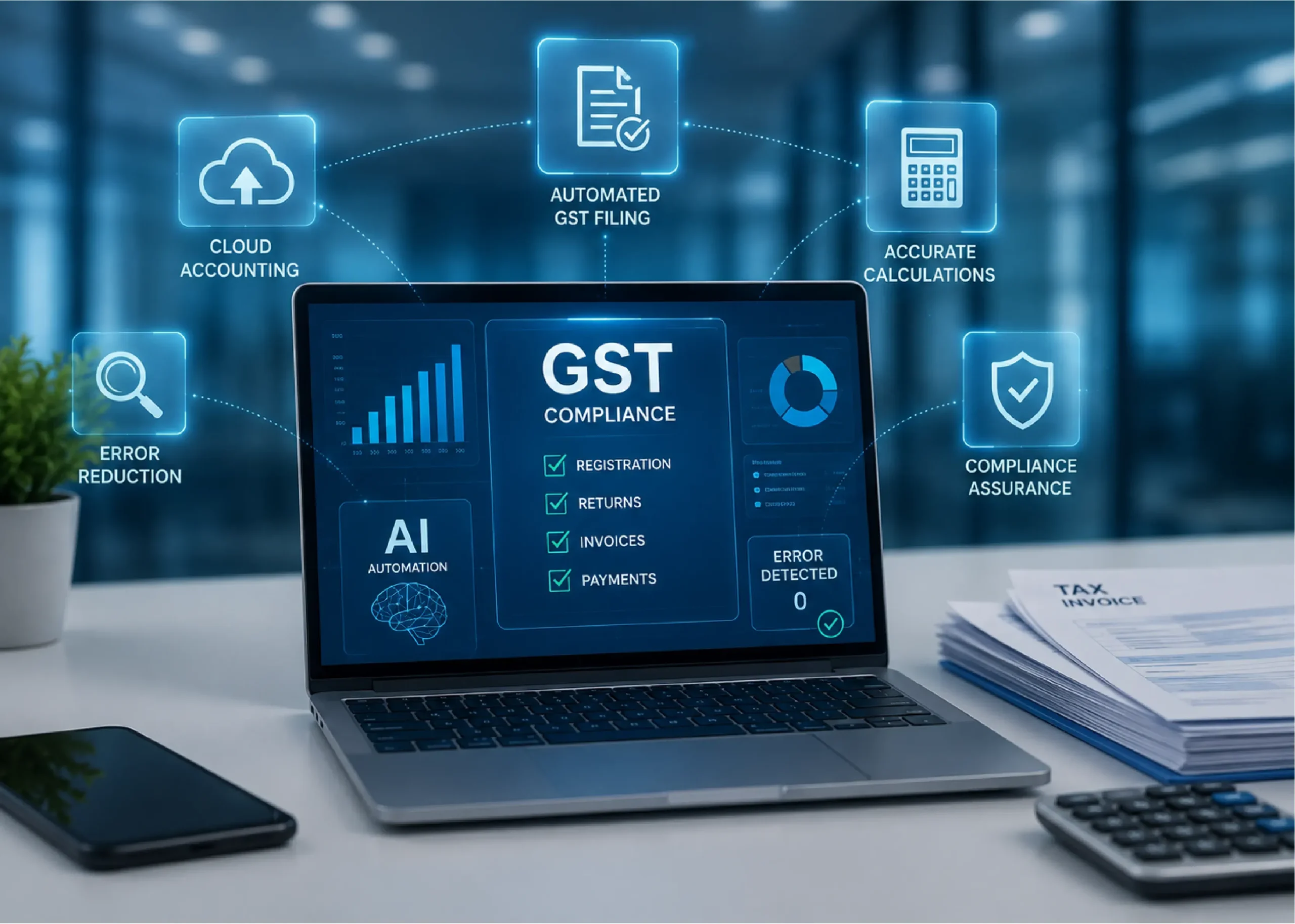
From errors to accuracy: How AI improves GST compliance

Managing GST manually is becoming increasingly difficult for modern businesses. Between invoice matching, tax calculations, return filing, and changing regulations, even small mistakes can create major compliance issues.

This is where AI GST Compliance solutions start making a real difference in how businesses run. By using smart automation, businesses can minimize errors, make filings easier, and maintain compliance without hours of manual work.

At Ankpal, we believe the future of finance is driven by smarter systems, not more manual work.

Why GST Compliance Is Challenging for Businesses

GST management today involves much more than simply filing returns.

Businesses regularly deal with:

  • Invoice mismatches
  • Incorrect tax calculations
  • Delayed filings
  • ITC reconciliation issues
  • Vendor compliance tracking
  • Human data entry errors
  • Constant GST rule updates

For expanding businesses, manual handling tends to slow things down, increase the risk of penalties, and create operational pressure.

That is why many companies are now moving toward GST automation software India businesses can rely on for accuracy and scalability.

How AI Improves GST Accuracy

AI-powered systems go beyond traditional accounting software. Instead of only recording transactions, they actively analyze, validate, and monitor financial data in real time.

Here’s how AI improves GST compliance and accuracy:

1. Automated Invoice Verification

One of the biggest causes of GST errors is invoice mismatch.

Using AI-powered GST filing systems, businesses can automatically:

  • Match invoices with purchase entries
  • Detect duplicate invoices
  • Identify incorrect GSTIN details
  • Verify tax calculations
  • Track supplier compliance status

This reduces dependency on manual verification and improves filing accuracy significantly.

2. Intelligent Error Detection

AI can instantly identify unusual or incorrect financial entries before returns are filed.

Modern automated GST software can detect:

  • Incorrect GST slabs
  • Wrong HSN/SAC codes
  • Mismatched tax amounts
  • Invalid GST numbers
  • Duplicate claims
  • Unusual transaction patterns

This lowers the chances of errors and keeps businesses away from costly compliance setbacks.

3. Quick and efficient GST reconciliation

Doing invoice reconciliation manually often results in delays and unnecessary errors.

With GST error reduction AI, businesses can automate reconciliation processes by:

  • Comparing large volumes of invoices instantly
  • Detecting mismatches in real time
  • Tracking missing vendor uploads
  • Tracking which ITC claims are eligible

It enables finance teams to work faster and close accounts without delays.

4. Live Monitoring of Compliance Processes

Frequent regulatory changes make manual GST tracking inefficient and hard to sustain.

AI‑based GST compliance software that businesses in India rely on today can:

  • Send filing reminders
  • Monitor compliance deadlines
  • Track vendor filing status
  • Alert businesses about risks
  • Automatically adapt to updated tax rules

This creates a more proactive and reliable compliance system.

5. Smarter Input Tax Credit (ITC) Management

Incorrect ITC claims are one of the leading reasons businesses receive GST notices.

AI helps improve ITC accuracy by:

  • Matching invoices automatically
  • Verifying vendor filings
  • Identifying blocked credits
  • Detecting duplicate ITC claims
  • Highlighting reconciliation gaps

This allows businesses to maximize valid claims while minimizing risks.

Why Businesses Are Adopting AI-Based GST Solutions

Businesses today want more than traditional accounting tools.

They want systems that can:

  • Reduce hands‑on work by automating daily operations.
  • Decrease the risk of compliance-related errors
  • Improve operational efficiency
  • Save filing time
  • Provide real-time visibility
  • Scale with business growth

This is why demand for cloud GST accounting and AI-driven financial systems is rapidly increasing across India.

The Role of Cloud-Based GST Systems

When AI combines with cloud technology, GST management becomes even more efficient.

Cloud‑based solutions today make it possible for businesses to:

  • Access financial data anytime
  • Manage multi-branch operations centrally
  • Automate backups and reporting
  • Improve collaboration between teams
  • Monitor compliance in real time

For growing businesses, this creates a more flexible and scalable financial ecosystem.

How Ankpal Simplifies GST Compliance

At Ankpal, we help businesses move beyond manual accounting with intelligent automation and AI-powered financial management.

Our platform is designed to simplify GST operations through:

  • Automated invoice management
  • Smart reconciliation
  • Real-time compliance tracking
  • Intelligent financial reporting
  • Cloud-based accessibility
  • Reduced manual dependency

Rather than correcting mistakes after filing, businesses can avoid them in the first place.

Conclusion

The next phase of GST management is all about smart, automated, and forward‑looking processes.

When operations expand and compliance demands rise, manual workflows start to create risk and slow things down.

Growth and changing compliance demands make manual processes increasingly unreliable and inefficient.

For modern Indian businesses, AI is no longer just an upgrade. It is becoming an essential part of smarter financial operations

Posted in GST

Legacy Business Software vs AI-Driven ERP

For years, Tally has been the default accounting software for thousands of Indian businesses. Accountants nationwide are already familiar with it and rely on it regularly.

With data playing a bigger role, accounting alone no longer covers everything businesses need.

In today’s environment, success depends on instant insights, automated processes, team alignment, and smarter financial management. That’s why conversations around Tally vs ERP software are becoming increasingly relevant for scaling businesses.

This is not about saying Tally is bad. It is about understanding what modern businesses now expect from their software.

What Tally Still Does Well

The foundation of Tally lies in accounting and compliance management.It remains effective for businesses that only need straightforward accounting functions.

It is commonly used for:

  • Bookkeeping
  • Invoice generation
  • Payroll basics
  • Financial reports

If your operations are limited to one location, this might already cover everything you need.

It gained popularity because it arrived with a solution to problem businesses were actively facing. It replaced time‑consuming manual records and spreadsheets with a much simpler way to handle accounting.

However, today’s business landscape looks very different from what it did ten years back.

Where Businesses Start Facing Problems

The more a business expands, the tougher it gets to keep everything running efficiently.

As the business scales, it becomes a lot more to handle, teams, departments, vendors, locations, and continuous customer interactions. What was once separate now becomes linked, accounting works alongside operations, sales, HR, and more.

At this stage, the gaps in the system become hard to ignore.

Here are a few typical challenges businesses run into:

  • Manual Data Entries
  • Different Tally for Different Location
  • Delayed reports
  • Lack of real-time financial visibility
  • Data duplication
  • Difficulty accessing records remotely
  • Errors caused by repetitive entries
  • Inventory Management

Tally was not originally built as a fully connected business management platform. And that limitation becomes more visible as businesses scale.

This is one reason many companies have started researching Tally alternatives India that can support broader operational needs.

Tally vs AI-Based ERP: The Core Difference

The biggest difference between traditional accounting software and AI-powered ERP systems is simple.

Tally records transactions.

AI-powered ERP systems help businesses understand and act on those transactions.

That changes the role of software completely.

Instead of only storing information, modern ERP platforms can:

  • Predict inventory shortages
  • Track cash flow trends
  • Flag unusual expenses
  • Free up time by automating everyday tasks.
  • Generate smart reports
  • Improve operational visibility
  • Reduce dependency on manual work

This is why the conversation around AI ERP vs Tally is not only about features anymore. It is about business intelligence.

Modern businesses no longer want software that simply stores data. They want systems that help teams make faster and smarter decisions.

Quick Comparison: Tally vs AI-Based ERP

Feature  Tally  AI-Based ERP 
Primary Focus  Accounting & compliance  Complete business management 
Access  Mostly desktop-based  Cloud access from anywhere 
Automation  Limited  Advanced automation workflows 
AI Insights  Not available  Predictive analytics & smart reporting 
Team Collaboration  Restricted  Real-time multi-user collaboration 
Integrations  Limited  Connects with CRM, HR, inventory, payment systems 
Scalability  Moderate  Designed for growing businesses 
Real-Time Reporting  Basic  Dynamic dashboards & live insights 

Why Cloud ERP Is Changing the Way Businesses Operate

One of the biggest shifts happening today is the move toward cloud-based systems.

The comparison of Tally vs cloud ERP often comes down to flexibility and accessibility.

With cloud ERP software:

  • Teams can work remotely
  • Business owners can access reports anytime
  • Departments stay connected in real time
  • Data backups happen automatically
  • Multi-location businesses operate more smoothly

The moment a sale is recorded, stock levels and accounts are synced across the system automatically.

No more manual file transfers or waiting for everything to sync at the end of the day.

That level of synchronization becomes extremely valuable for growing businesses.

Why Businesses Are Looking Beyond Traditional Accounting Software

Many companies do not switch software because they dislike Tally.

They switch because operational complexity starts slowing them down.

At first, separate tools may seem manageable:

  • One software for accounts
  • Another for inventory
  • Excel for reporting
  • WhatsApp for approvals
  • Emails for vendor tracking

As time passes, it creates confusion, slows operations, and reduces efficiency.

The solution lies in modern ERP, where everything works together within a single integrated system.

This is where discussions around Modern ERP vs Tally become important. Businesses are no longer evaluating software based on accounting capabilities. They’re measuring efficiency across the whole organization, not just in isolated areas.

The Rising Influence of AI in Finance

From small firms to large enterprises, AI is quietly transforming how finance operations run.

What once required hours of work now runs quietly in the background. For example:

  • AI can categorize expenses automatically
  • Payment reminders can be triggered intelligently
  • MIS reports can be generated instantly
  • Cash flow risks can be identified earlier
  • Duplicate entries can be detected automatically

This not only reduces workload but also gives management the space to think beyond day-to-day administration.

The more transactions a business handles, the more AI automation becomes a necessity rather than a choice.

Is It Time to Replace Tally?

The answer depends entirely on your business stage.

If your company has:

  • A single office
  • Basic accounting requirements
  • Limited operational complexity
  • Minimal team coordination

Then Tally may still work perfectly fine.

But if your business is scaling rapidly, handling multiple departments, or struggling with disconnected systems, then evaluating Tally replace software India may be a smart long-term decision.

The real question businesses should ask is:

“Do we only need accounting software, or do we need a smarter operational system?”

That difference matters.

Why Modern Businesses Are Exploring ERP Platforms Like Ankpal

Today’s businesses expect more from their software.

They want:

  • Automation
  • Mobility
  • Faster reporting
  • Operational visibility
  • Better collaboration
  • Real-time insights

Modern ERP platforms like Ankpal are designed around these expectations.

Instead of operating in isolation, they integrate all core business functions into one centralized platform.

Increasingly, businesses are viewing ERP not as a replacement for Tally, but as a step toward building a more scalable and future‑ready operation.

Conclusion

Tally played an important role in helping Indian businesses digitize accounting.

But modern businesses are now moving beyond basic bookkeeping. They want systems that can automate operations, connect departments, improve visibility, and help leadership make smarter decisions faster.

That is where AI-based ERP platforms are creating a major shift.

The future of business software is no longer just about maintaining records. It is about helping businesses operate more intelligently.

And for many growing companies in India, that transition has already started as they explore the question of best ERP vs Tally solutions for their future growth.

Why Multiple Software Systems Are Slowing Down Indian Businesses

It’s a uniquely familiar frustration for business owners across India.

You ask what a simple question should be. Something as basic as, “How much did we make last month, exactly?” And instead of an answer, you get a pause. Then someone opens three different tabs. Then a spreadsheet. Then another tab. By the time you finally get a number, you’re still not sure you can rely on it.

Across India, thousands of businesses deal with this day after day. And it nearly always comes down to this: everything is split across disconnected business tools that don’t sync.

How Businesses End Up Here

No one begins with the intention of creating a disorganized operation. It doesn’t happen overnight. It happens with one tool at a time.

You start small. You begin with software like Tally or Zoho Books because someone recommended it. Then GST and operational requirements grow, so inventory and billing start moving into tools like Busy or Marg. As teams expand, spreadsheets and additional trackers begin filling the operational gaps. In no time, your business is running several disconnected business tools, creating a classic multiple software systems problem where nothing fully connects. It works, more or less, until the business starts scaling.

As soon as you scale even slightly more customers, another location, a new product, the problems surface. Data does not match. Reports take longer than they should. Instead of analyzing finances, your accountant is busy matching numbers all day. Meanwhile, you’re making important decisions with data that’s a few days old and missing pieces.

The real problem lies in the Gaps between Systems

Each software you use probably does its individual job reasonably well. The billing tool generates invoices. The accounting software tracks expenses. The inventory tracker shows stock levels. The problem is not what each one does. It is what falls between them.

When a sale happens, that information needs to travel from your billing system to your accounts to your inventory records. In a connected system, this happens instantly. In a disconnected setup, it depends on a person. And people make mistakes, especially when the work is repetitive.

A wrong entry here. A missed update there. Over time, these small errors compound. Your GST filings start showing discrepancies with your actual sales. Your stock counts drift away from reality. Your profit figures stop making sense. And by the time you notice, you are dealing with a mess that takes weeks to sort out.

This is the real cost of relying on fragmented business operations software instead of a unified system.

Compliance Makes This Even More Urgent

Today, doing business in India requires navigating compliance requirements that have become much stricter over time. Managing GST means handling several monthly returns, constant data reconciliation, and documentation that leaves little room for error.

The moment your data sits in different tools, maintaining accuracy gets difficult. A mismatch between what your billing software recorded and what your accounting books show is not just an internal issue. It can generate notices. It can slow down loan applications. These gaps can raise questions from auditors or investors looking for clean, provable data.

Companies working from one unified business software are far better equipped to operate and grow. When every transaction is recorded once and flows automatically through compliance, there is far less room for the kind of errors that create problems later.

How Cloud ERP Is Transforming Small and Medium Businesses

Not long ago, ERP systems seemed impractical for many small businesses. It was seen as expensive, complicated, and suited only for organizations with dedicated IT staff.

That perception is now outdated.

Modern Cloud ERP for SMEs in India has changed the picture entirely. The cost is accessible. Setup happens in days rather than months. There is no hardware to manage, and no technical team is required to keep things running. And because it is cloud-based, your team can access it from anywhere.

What you get is a complete all-in-one ERP India solution where billing, accounting, inventory, GST compliance, and reporting all work together in one system.

This is why many Indian businesses are moving away from disconnected combinations of Tally, Zoho Books, Busy, Vyapar, Marg, spreadsheets, and standalone tools toward unified business software that connects everything in one place.

No copying. No reconciling. No chasing numbers at the end of the month.

What This Looks Like When It Actually Works

Picture a trading business at a certain place running on multiple tools. Invoices are raised in one place, manually entered into accounts, and cross-checked against inventory in another. GST returns take most of a week and still produce errors.

After moving to a unified platform, that process becomes automatic. An invoice updates accounts and inventory at the same time. GST data is captured at the point of transaction. Returns that once took a week now take a few hours.

The people who were moving data are now doing work that actually moves the business forward.

This shift is not just about saving time. It removes the gap between action and understanding. So, this is the difference between disconnected systems and a true business management software in India that brings everything together.

One Platform That Brings It All Together

This is exactly the problem Ankpal was built to solve.

Ankpal is a cloud-based business management platform made for Indian SMEs. Billing, accounting, inventory, and GST compliance all sit in one place. When a sale is made, the invoice is generated, the accounts update, and stock adjusts simultaneously. GST calculations happen automatically. GSTR-1 and GSTR-3B preparation draws directly from transaction data, so there is nothing to manually compile at month end.

The dashboard gives you a live picture of your business at any moment. Not yesterday’s report. What is happening right now.

Today, over 5,000 businesses across India run on Ankpal after struggling with fragmented setups involving Tally, Zoho Books, Busy, Marg, spreadsheets, and disconnected business operations software.

If your business is currently juggling multiple tools, the problem does not stay the same as you grow. It quietly compounds.

Book a demo at ankpal.com and discover how Indian SMEs are replacing multiple tools with one unified system.